
The Science Behind Kinedu
Back to home

The Science behind Kinedu

Most parenting advice is opinion. Kinedu is built on evidence — millions of real developmental observations, a research partnership with Stanford, and decades of child-development science — distilled into a daily plan made for your child.
Stanford
MIT
1,000
days shape a lifetime — from pregnancy through age 2

The architecture of a lifetime is assembled in early childhood — and your everyday interactions are what shape it.

Your baby's brain is building itself right now — faster than it ever will again.

At first, everything grows at once — physical, cognitive, language and social-emotional skills move as one. Then, like a universe after the Big Bang, they expand into distinct but deeply connected abilities around 12 months.

And the pace is staggering: about 50 milestones by 1 month, ~300 by age 2. We measured it with Stanford — early on, progress in one ability pulls the others along.

Stanford · The Structure of Development
Physical Cognitive Linguistic Social-Emotional
~12 mo 06121824 age (months) ABILITY
Each line is a developmental area — bundled early, then fanning apart with age.
21,861
children studied
177,934
developmental observations
414
milestones tracked
Under the hood

How the brain builds itself

In the first years, the brain physically reorganizes at a pace it will never match again. Here's what's happening beneath the surface.

2x
A baby's brain roughly doubles in size in the first year alone.
150%
Connections peak at about 150% of adult levels — then the brain prunes, keeping what's used and trimming the rest.
100x
As pathways get insulated, signals can travel up to 100x faster — which is why new skills suddenly "click."
Developmental neuroscience: synaptogenesis, pruning & myelination
The framework

How development actually works

For a century, each great theory captured just one of these — and treated the rest as background. Kinedu is built to honor all five at once.

01

Everything is connected

Movement, language, thinking and emotion grow as one connected web — which is why a single playful moment can move all of them at once.

02

It builds in sequence

Each skill rests on the ones before it. Babbling precedes words; reaching precedes crawling. Development stacks, step by step.

03

The range of normal is wide

Healthy children reach the same milestones on very different timelines. The sequence is universal; the timing is personal.

04

Some windows matter more

At certain moments the brain is especially ready to learn a specific skill. Meeting those windows makes everyday moments count.

05

Every child surprises us

No model predicts exactly how one child will unfold. The science gives you the map — your child draws the route.

Serve and return: how brains are built

Your baby reaches out, you respond — a look, a word, a hug. Scientists call it serve and return: the exchange that builds the brain.

Kinedu is built around it. In a study with Stanford, one short Kinedu activity video led parents to make 69% more bids for joint attention and speak 35% more.

Stanford · Kinedu activity study
Parent-child serve and return interaction
What actually works

The sweet spot: guided play

Decades of studies point to the same place: children learn most when an adult sets the stage and the child leads the play. Not rigid lessons. Not a free-for-all. The space in between.

Too little structure

Free play

All freedom, no direction. Joyful and essential — but the learning goal can get lost.

Just right

Guided play

An adult sets a goal and offers gentle prompts; the child explores and leads. Engagement and direction, together.

Too much structure

Direct instruction

All direction, little agency. Efficient for facts — but it narrows curiosity and exploration.

0.63
Effect size of guided play vs. direct instruction on early concepts — medium-to-large (a typical program is ~0.20).
1 week+
The advantage held a week later — real learning, not a novelty effect.
4,000+
Children across 39 studies confirmed the pattern in a 2022 meta-analysis.
Guided-play meta-analysis · 39 studies, ~4,000 children

Kinedu Skills®: development reimagined

Traditional checklists ask: "Has your baby done X yet?" Kinedu Skills® asks something better: how your baby's whole developmental universe is unfolding — and what they're ready to learn next.

Built with Prof. Michael Frank's lab at Stanford from millions of milestone observations, it maps 414 milestones across 46 skills — treating development the way the data shows it really works: multi-dimensional, interdependent, and always moving, never just pass/fail. Psychometrically validated (α = 0.996).

MIT-Solve · Stanford · research preprint
Kinedu Skills Milestone Model
Why it matters

The highest-return years of a lifetime

Economists who followed children for 40 years reached a striking conclusion: almost nothing you invest in later pays back like the early years.

7-10%
Annual return on quality early-childhood investment — above the stock market's long-run average (work led by Nobel laureate James Heckman).
+25%
Higher adult earnings for children who got a play-based, responsive home program as babies — enough to erase the penalty of early adversity.
Play
In that study, nutrition supplements alone changed nothing long-term. The driver was warm, playful, responsive interaction — exactly what Kinedu builds.
Heckman et al. · Perry Preschool · Jamaica longitudinal study
Our point of view

Not perfection. Presence.

The science is reassuring: warm, responsive, "good enough" parenting produces secure, thriving children in the large majority of cases. You don't need to get every moment right.

What matters is being a present, intentional guide — combining warmth with structure, and responding to your child without fearing your own authority. That's the parent Kinedu is built for.

Warmth + structure Responsive, not permissive Consistency over perfection
Research Partners

Built alongside world-class researchers

Stanford

Prof. Michael Frank's lab — our partner on the Structure of Development research and the studies measuring how Kinedu activities change parent-child interaction.

MIT-Solve

Supporting the Kinedu Skills® Milestone Model — a new approach to tracking early childhood development.

The invisible forces

What holds it all together

Milestones are the visible universe — the skills you can point to and celebrate. But like the dark matter that keeps galaxies from flying apart, four invisible forces decide whether those skills take hold. None of them show up on a milestone chart; all of them shape how it fills in.

Stimulates

Play

Serve-and-return from the first weeks of life — the back-and-forth that wires the brain.

Buffers

Relationships

Warmth plus structure — the container that holds everything else.

Strengthens

Stress

Not the enemy. The right amount builds resilience — what matters is the buffer, not the stressor.

Anchors

Predictability

Routines, reading, mealtimes and sleep — when the brain replays and locks in the day's learning.

+10%
More learning kept by children who napped after a task — one example of predictability at work.

Four forces, one parent — at the center of every one of them is you.

Shonkoff · Fisher · Spencer

You are your baby's most powerful catalyst

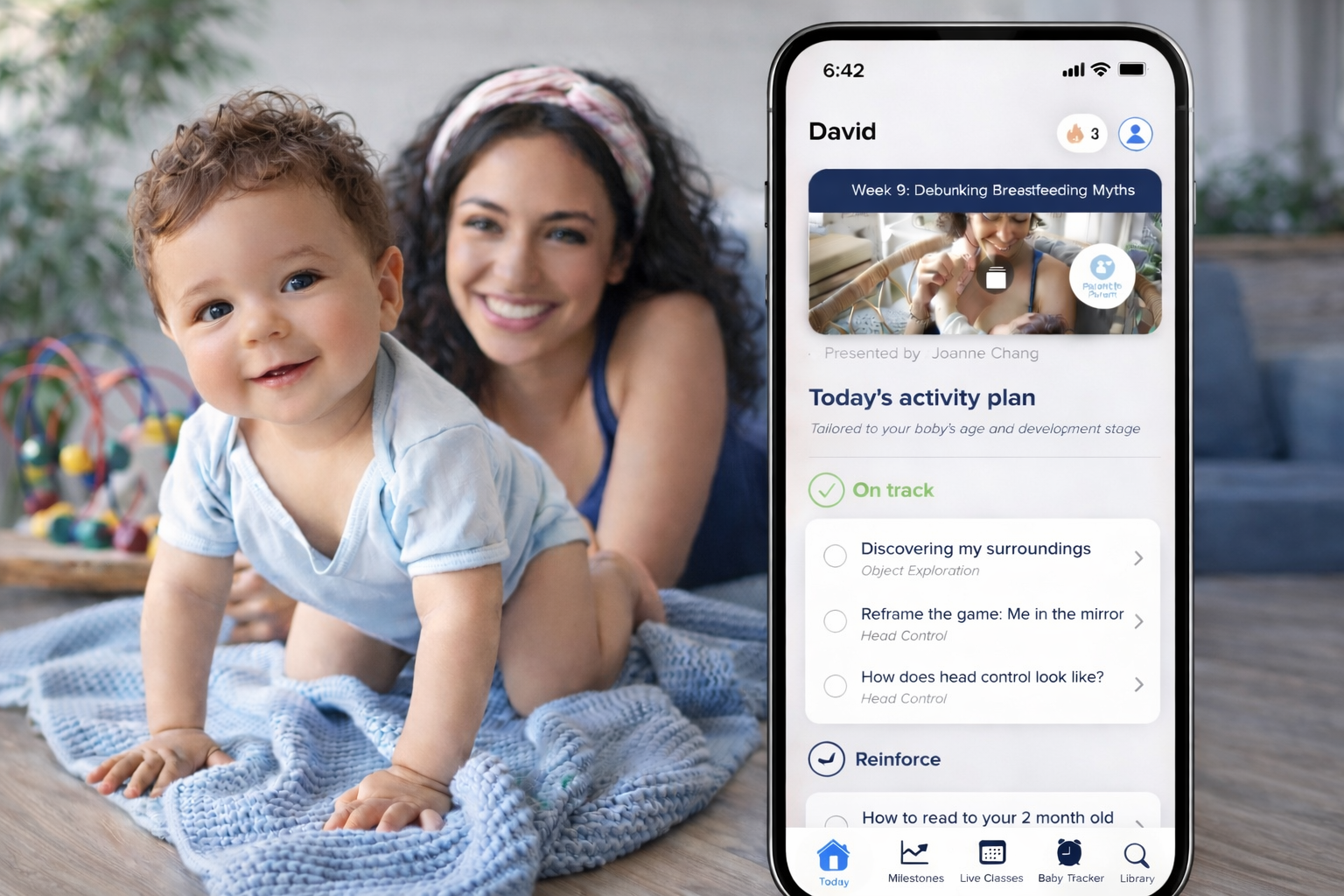
You don't need fancy toys or a flawless routine — you need a plan. Kinedu turns the science on this page into a daily plan built around your child: challenging enough to grow new skills, smart enough to reinforce what they've learned, and simple enough to fit real family life.

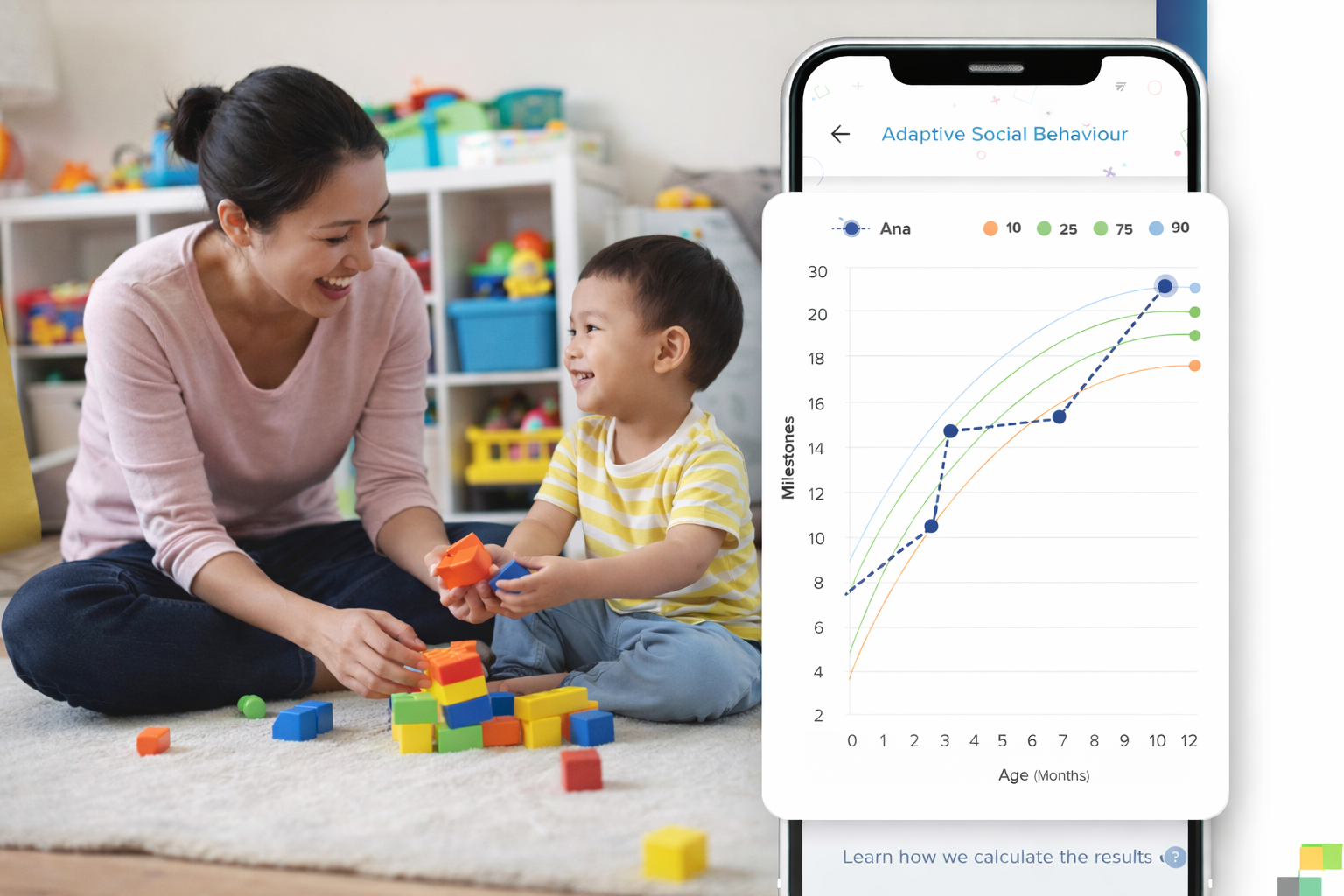
Personalized milestone tracking
A new activity every day, just for your baby
Adapts as your baby grows

Start science-based parenting today.

Everything in Kinedu is built on real research. See the difference it makes.

Start your free trial